Best AI Script Writers for YouTube Creators: An Honest 2026 Guide
Published October 30, 2026 · 9 min read
Best AI Script Writers for YouTube Creators: An Honest 2026 Guide
The best AI script writers for YouTube creators are not the ones that promise to replace you. They are the ones that fit into a real creator workflow: turning a video idea into a structured outline, generating hook variations worth testing, and producing first drafts you can rewrite in your own voice. The market is crowded with tools making big claims, so this guide takes an honest look at what these tools actually do well, where they fall short, and how working creators use them without losing the voice their audience subscribed for.
What an AI Script Writer Actually Does
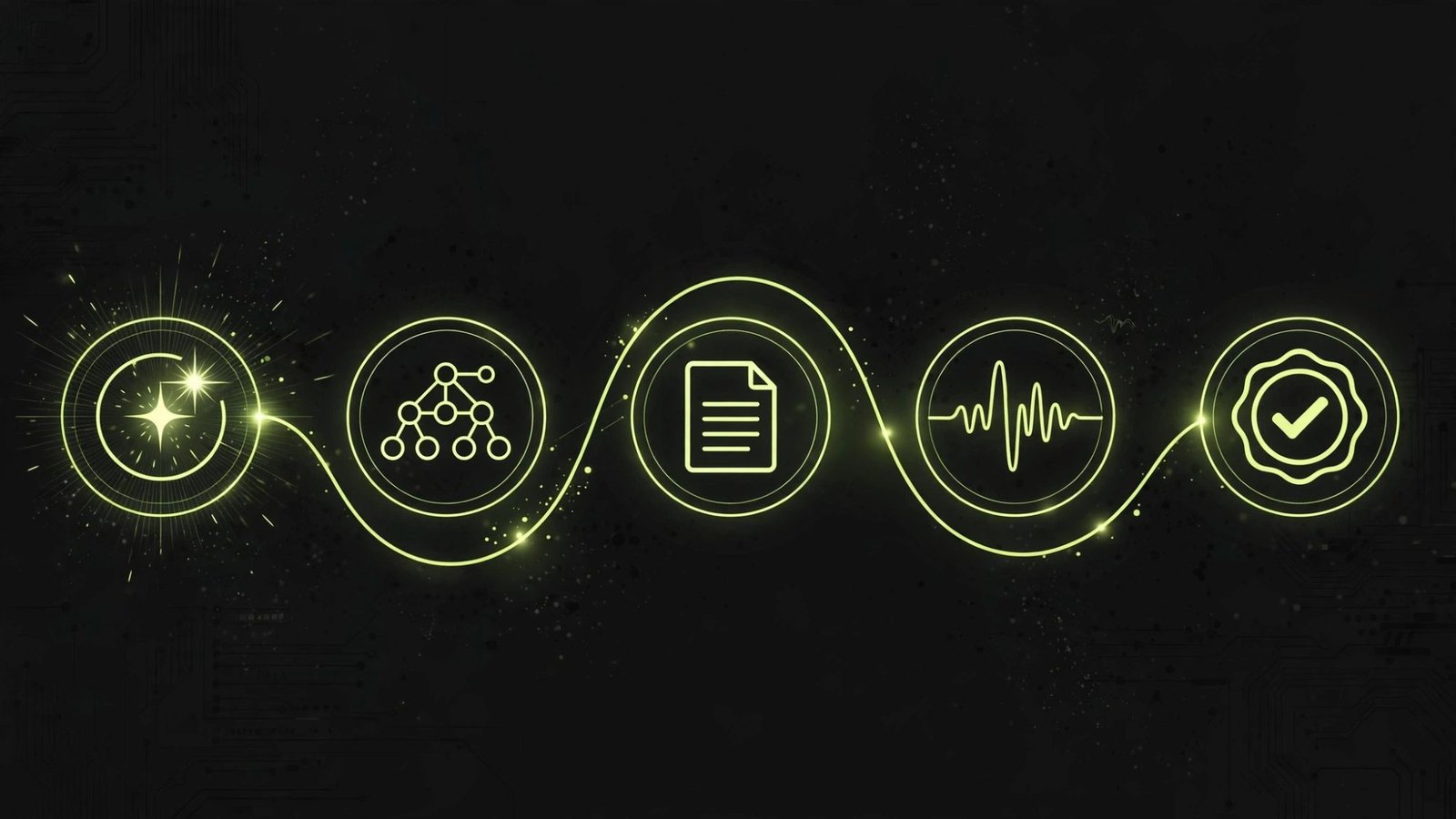
Strip away the marketing and an AI script writer performs a handful of concrete functions. It generates video outlines from a topic or title. It drafts scripts in a specified format — talking-head monologue, listicle, tutorial, review. It produces variations of hooks and calls to action. Some tools add pacing suggestions, B-roll notes, or chapter markers. A few integrate with teleprompter apps or thumbnail concept generators.
What it does not do is understand your audience, hold opinions, or tell stories from your life. Those are the elements that make a video worth watching, and they remain firmly human work. The creators who get the most from these tools are the ones who are clearest about this division of labor.
The Honest Strengths
Speed on First Drafts
The single biggest win is eliminating the blank page. Going from an idea to a 1,500-word first draft in minutes rather than hours changes the economics of content production, especially for creators publishing multiple videos per week. The draft will need rewriting, but rewriting is faster than writing from scratch.
Hook and Title Variations
Most creators under-test their hooks. AI tools can generate dozens of opening variations in seconds, giving you a testing pool that would take hours to produce manually. Since the first fifteen seconds of a video disproportionately determine retention, this is high-leverage assistance.
Structure for Complex Topics
Tutorial and explainer videos live or die on structure. AI is genuinely good at organizing research into logical sequences, identifying the steps a beginner needs, and flagging gaps in coverage. For educational creators, the outlining function alone can justify the tool.
Repurposing
Turning one long video into Shorts scripts, community posts, and video descriptions is tedious work that AI handles well. The repurposing workflow — same content, new formats — is where automation adds the most value with the least creative risk.
The Honest Limitations
Generic Voice
Out-of-the-box AI scripts sound like everyone else's AI scripts. The phrasing is competent but characterless: the same transitions, the same listicle rhythms, the same hollow enthusiasm. Audiences may not consciously identify AI writing, but they feel the absence of personality in retention metrics. This is the number one reason to rewrite rather than publish raw output.
Weak Opinions and Takes
AI hedges. It presents both sides, qualifies everything, and avoids the strong claims that make commentary channels compelling. If your content depends on having a point of view — reviews, analysis, commentary — the AI draft is a starting skeleton that needs your spine.
Factual Unreliability
AI script writers confidently invent statistics, misattribute quotes, and describe products that do not exist. Every factual claim in an AI draft needs verification before it reaches your audience. For creators in technical, financial, or medical niches, this verification step is non-negotiable — publishing an AI-hallucinated fact can destroy credibility you spent years building.
The Sameness Trap
When thousands of creators use the same tools with similar prompts, the output converges. Channels start to sound alike. The creators who stand out are the ones whose scripts could only have come from them — which means the AI draft is input, not output.
What to Look For in a Tool

Not all AI script writers are built for YouTube specifically. The ones worth your time share a few traits.
First, format awareness. A tool that understands the difference between a talking-head script, a Shorts script, and a tutorial with timestamps saves you reformatting work. Generic text generators can be coaxed into these formats, but purpose-built tools do it natively.
Second, length control. YouTube scripts have real length requirements — an eight-minute video needs roughly 1,000 to 1,200 spoken words. Tools that let you specify target duration and hit it approximately are far more useful than ones that produce whatever length they feel like.
Third, iteration support. The first draft is never the final draft. Tools that make it easy to regenerate specific sections, adjust tone, or expand a bullet into a full segment fit the real workflow. Single-shot generators that produce one take-it-or-leave-it draft are frustrating.
Fourth, voice memory. The better tools let you save style preferences or feed in samples of your past scripts. This does not fully solve the generic-voice problem, but it narrows the gap and reduces rewriting time.
The FiftyGPT story generator is a solid free starting point for narrative-style content — it handles story structure and creative outlines well, which translates directly to the storytelling segments many YouTube formats rely on. Use it for outlines and creative blocks, then apply the rewriting workflow below for the final script.
The Workflow That Actually Works
Here is the process used by creators who publish consistently without sounding automated.
Step 1: You Bring the Idea and the Angle
Start with your video concept and, critically, your angle — the specific take that makes this video yours. Write the angle down in one or two sentences before touching any tool. If you cannot articulate the angle, the video is not ready, and no tool will fix that.
Step 2: AI Generates the Outline
Feed the tool your topic, angle, target duration, and format. Ask for an outline with hooks, main sections, and a call to action. Review the outline ruthlessly: cut sections that do not serve the angle, reorder for narrative flow, add the stories and examples only you can provide.
Step 3: AI Drafts Section by Section
Generate the script one section at a time rather than all at once. Section-by-section generation produces tighter writing and gives you natural checkpoints to inject your voice, correct facts, and adjust the direction before the draft runs away from you.
Step 4: You Rewrite for Voice
This is the step most creators skip and the step that matters most. Read the draft aloud — the read-aloud test catches every phrase that looks fine on screen but sounds robotic spoken. Replace generic transitions with your own. Add your stories, your opinions, your asides. Cut anything you would not actually say. The goal is a script that sounds like you on your best day, not like a competent stranger.
Step 5: Verify Every Fact
Go through the script and check every statistic, name, date, and claim. This takes time, but it is the price of using AI in content creation. One hallucinated fact in a video can generate the kind of comment-section correction that undermines the whole piece.
Shorts and Short-Form Scripts
Short-form scripting is a distinct skill, and AI tools handle it unevenly. A sixty-second Short needs a hook in the first two seconds, one idea, and a payoff — a structure most general AI writers bloat. When generating Shorts scripts, specify the exact format: word count under 150, hook first, no intro fluff. Generate several hook variations and test them; hook quality is the entire game in short-form.
Monetization and Policy Reality
YouTube's policies focus on content quality, not production method. Channels get demonetized for repetitive, low-value, mass-produced content — which can be made with or without AI. A well-produced video with an AI-assisted script that delivers genuine value faces no policy issue. The creators who run into trouble are the ones publishing barely-edited AI output at volume, which is a quality problem that predates AI tools.
That said, disclosure norms are evolving, and audience expectations matter independently of policy. Viewers who discover a channel is fully automated often feel deceived, even if no rule was broken. The safest position is also the best creative position: use AI as an assistant, keep yourself as the author, and you have nothing to disclose and nothing to defend.
Frequently Asked Questions
Can AI write a full YouTube script for me?
AI can generate a complete draft script, but the best results come from treating that draft as raw material. Successful creators use AI for outlines, hooks, and first drafts, then rewrite in their own voice. Fully automated scripts tend to sound generic and underperform in retention.
Do AI-written scripts hurt YouTube monetization?
YouTube's policies target low-quality, repetitive, mass-produced content rather than AI assistance specifically. A well-produced video with an AI-assisted script that provides genuine value is treated the same as any other content. The risk comes from publishing unedited, low-effort AI output at scale.
What should an AI script writer handle versus me?
Let AI handle structure, research organization, hook variations, and first drafts. Keep for yourself the voice, the opinions, the stories, and the final judgment on what stays. Your audience subscribes for your perspective — that is the one thing AI cannot supply.
Are free AI script writers good enough?
Free tools are adequate for outlines and short-form scripts, but they often produce flatter language and weaker hooks than paid options. For creators publishing regularly, the time saved by a better tool usually justifies the cost. Start free, upgrade when the workflow bottleneck is clearly the writing.
How do I keep AI scripts sounding like me?
Feed the tool examples of your past scripts or detailed style notes, generate multiple variations of key sections, and always do a final read-aloud pass rewriting anything that does not sound like your natural speech. The read-aloud test catches robotic phrasing that looks fine on screen.
SUGGESTED RELATED POSTS
- AI Character Name Generator
- Book Title Generator
- Using AI to Write Bedtime Stories for Kids
- The Read-Aloud Test
