Free Alternative to StealthWriter: 5 Honest Options to Try First
Published October 30, 2026 · 9 min read
Free Alternative to StealthWriter: 5 Honest Options to Try First
If you are searching for a free alternative to StealthWriter, you probably already know the pitch: feed in AI-generated text, get out text that supposedly slips past AI detectors. StealthWriter itself is a paid service, and plenty of users want a no-cost version of the same idea. The good news is that free humanizer tools do exist, and several are genuinely useful. The bad news is what no humanizer company wants to say out loud: no tool — free or paid — can promise undetectable AI text. Anyone who claims otherwise is selling marketing, not certainty.
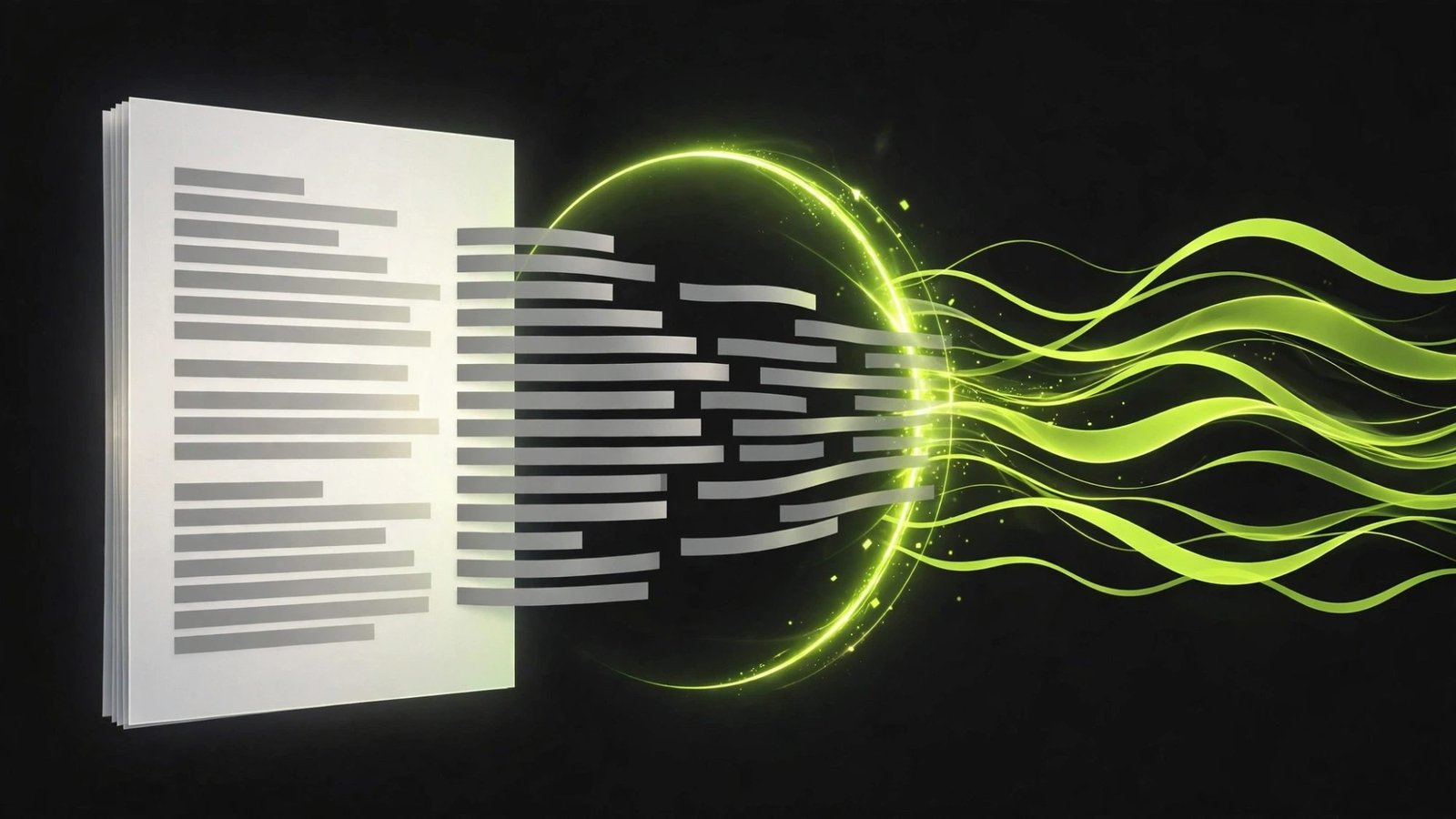
This guide compares five honest free alternatives to StealthWriter, explains what humanizers can and cannot do, and shows you how to get genuinely human-sounding text from AI drafts. Everything here follows one rule: honesty about detection is more useful than hype about evasion.
Why People Look for a Free StealthWriter
StealthWriter positions itself as an AI humanizer: paste in ChatGPT or Claude output, click a button, and receive rewritten text with a lower AI-detection score. People look for a free alternative to StealthWriter for two reasons. First, the paid price is hard to justify for occasional use — students polishing a cover letter, bloggers editing AI-assisted drafts, marketers testing ad copy. Second, many users want to try the concept before committing to a subscription, to see whether humanizers even do what they claim.
That second impulse is the smart one. Humanizers are worth testing, but they are worth understanding first. An AI detector does not read your text and decide it was written by a robot. It measures statistical properties — how predictable the word choices are, how uniform the sentence lengths look, how much the phrasing resembles the output patterns of large language models — and returns a likelihood score. A humanizer tries to push those numbers down by injecting variety: different sentence lengths, less common synonyms, broken-up repetitive structures. Sometimes the score drops. Sometimes it does not. And two detectors can disagree about the same paragraph.
Free Alternative to StealthWriter #1: FiftyGPT AI Humanizer
The FiftyGPT AI Humanizer is the most direct free alternative to StealthWriter: a free AI humanizer tool that rewrites AI-generated text into more natural-sounding prose, no sign-up required. Paste your draft, get a rewritten version in seconds, and iterate.
What makes it a good first stop is the honest framing. It reworks obvious AI patterns — the robotic transitions ("Furthermore," "In conclusion," "It is important to note that"), the flat sentence rhythm, the over-formal vocabulary — into something closer to how a person writes. It will not claim to make your text invisible to detectors, and it should not: no rewrite can guarantee that.
Best for: Students, bloggers, and freelancers who want a quick first pass over AI-assisted drafts without creating an account.
Limit: Free tools process a limited amount of text per session. Long documents need to go through in chunks.
Free Alternative to StealthWriter #2: QuillBot's Paraphrasing Modes
QuillBot is primarily a paraphrasing tool, but its rewording modes function as a de facto humanizer for many users. Its free tier offers several rewriting styles — standard, fluency, and limited access to more creative modes — which reshuffle sentence structure and vocabulary in ways that reduce repetitive AI phrasing.
The difference between a paraphraser and a dedicated humanizer is mostly marketing. Both rewrite text to sound less mechanical. QuillBot's strength is sentence-level variety; its weakness is that it can produce awkward synonyms if you use the aggressive modes. Stick with the moderate settings and proofread the output.
Best for: Writers who want fine-grained control over how aggressively the text is rewritten.
Limit: Free tier has character limits and restricts some modes. Watch for unnatural word substitutions in creative mode.
Free Alternative to StealthWriter #3: Manual Editing With a Read-Aloud Pass
This one costs nothing and outperforms every tool on this list. The read-aloud test works because AI-generated text has a rhythm problem: uniform sentence lengths, predictable transitions, and generic filler. Your ear catches what your eyes miss.
Here is the method:
- Paste your AI draft into any text editor.
- Read it aloud, slowly. Every place you stumble or get bored is a place the text sounds robotic.
- Cut the filler phrases AI models love: "delve into," "in today's fast-paced world," "it's important to note," "moreover" used three times per page.
- Break up the sentence rhythm. If every sentence is 18–22 words, split one into two short ones.
- Add one specific detail from your own experience or knowledge. AI text is generic by default; specificity is the fastest humanizer there is.
Best for: Any important text — applications, published articles, client work — where quality matters more than speed.
Limit: Takes longer than clicking a button. That is also why it works better.
Free Alternative to StealthWriter #4: Grammar-Focused AI Rewriters
Several free grammar and style tools (including the free tier of FiftyGPT's own writing suite) rewrite awkward AI phrasing as part of their editing suggestions. These are not marketed as humanizers, which is arguably their advantage: they improve the writing itself rather than optimizing against a detector.
AI drafts often contain the same tells: passive constructions stacked three deep, hedged claims ("may potentially suggest"), and sentences that say nothing in many words. A style-focused rewrite that tightens and clarifies the text naturally lowers the AI-like statistical patterns, because the patterns themselves are often just bad writing.
Best for: Users who want genuinely better writing, not just a lower detector score.
Limit: Will not dramatically change a detector score on its own. But the writing improves, which is the point.
Free Alternative to StealthWriter #5: Prompting for Human Style From the Start
The cheapest humanizer is a better prompt. Much AI text sounds robotic because the prompt asked for robotic text ("write a professional article about X"). Ask instead for the opposite:
- "Write this the way an experienced blogger would explain it to a friend — conversational, specific, no filler."
- "Vary sentence lengths. Use short sentences for emphasis. Avoid 'furthermore' and 'in conclusion.'"
- "Include a concrete example in every section."
The output will still be AI-generated, and detectors will still flag portions of it. But the starting draft will be far more natural, which means less rewriting — human or automated — afterward. Pair a good prompt with one of the tools above and you get the best of both worlds.
Best for: Anyone who uses AI writing regularly and wants to reduce editing time at the source.
Limit: Does not change the fundamental statistical properties detectors measure. Treat it as quality improvement, not detection insurance.
The Honest Truth About "Undetectable" Claims
Every serious discussion of a free alternative to StealthWriter has to address the claim on the tin: that humanized text is "undetectable." Here is what that claim actually means and why it is misleading.
AI detectors measure likelihoods, not verdicts. A score of 87% AI does not mean 87% of the text is AI-written. It means the detector's model considers the text's statistical patterns more similar to AI output than human output. Different detectors use different models, thresholds, and training data, which is why five tools can give five different scores for the same paragraph.
Humanizers change patterns, not authorship. A humanizer alters the surface statistics — vocabulary predictability, sentence-length variance — but it cannot add genuine human thought: personal anecdotes, domain expertise, original reasoning. Detectors are imperfect, but the thing they are trying to detect (AI-like statistical regularity) is a real property of machine-generated text.
The arms race never ends. Detector models update. Humanizer outputs become part of training data. A trick that lowers scores today may be explicitly modeled tomorrow. Paying for "undetectable" is paying for a temporary statistical edge, not a permanent one.
This is why we do not promise undetectable text anywhere in this guide. What free humanizers genuinely offer is a faster path from robotic first draft to natural-sounding prose — and that is a real, useful thing, honestly described.
When Using a Humanizer Is (and Isn't) Okay
Context matters more than the tool. Polishing an AI-assisted draft of your own blog post, product description, or newsletter with a free humanizer is normal editing — writers have used tools to improve drafts forever. Using a humanizer to disguise AI-written work in a context that requires original human authorship — a school assignment, an academic submission, a job application that asks for your own writing sample — crosses an ethical line regardless of which tool you use.
If you are a student: check your institution's AI policy before using any humanizer. Many universities treat attempts to evade AI detection as academic misconduct, separate from the question of whether AI assistance was allowed in the first place.
Frequently Asked Questions
Is there a free alternative to StealthWriter?
Yes. Several free AI humanizer tools rephrase AI-generated text with no cost tier, including the FiftyGPT AI Humanizer and other no-sign-up rewriters. Free tiers usually have daily word limits, but they work fine for shorter drafts.
Can any free humanizer bypass AI detection?
No tool — free or paid — can promise undetectable AI text. Humanizers reduce obvious AI patterns like repetitive phrasing and uniform sentence length, but detectors measure statistical likelihoods, not certainty, and results vary across tools.
Is it ethical to use an AI humanizer?
It depends on context. Using a humanizer to polish your own drafted ideas for a blog or marketing copy is generally fine. Using one to evade academic-integrity checks or deceive a client about authorship is not. Always check the rules of your institution or publisher.
How do humanizers actually work?
Humanizers rewrite text to reduce AI-like statistical signals: they vary sentence length, swap in less predictable word choices, and break repetitive structures. This can lower AI scores on some detectors, but no rewrite changes what a detector fundamentally measures.
What is the safest way to make AI text sound human?
Edit it yourself. Read the draft aloud, cut filler phrases, add specific examples from your own experience, and vary your rhythm. Manual editing beats any humanizer tool because it adds genuine human thought.
