GPTZero vs Originality.ai: Honest Comparison (2026)
Published October 26, 2026 · 7 min read
GPTZero vs Originality.ai: An Honest Comparison (2026)
GPTZero vs Originality.ai is the comparison everyone in AI detection ends up making. They are the two names that come up in every faculty meeting, every Reddit thread, and every "is this AI?" panic — GPTZero as the free, educator-friendly checker, Originality.ai as the paid, publisher-grade screening tool. But the comparison most people want — "which one is more accurate?" — is the wrong question, and chasing it leads to exactly the kind of false confidence that makes AI detection so fraught. Here is an honest look at what each tool actually is, how they differ, and what neither one's score can do for you.
What Each Tool Actually Is
GPTZero launched in early 2023 as a student-built AI detector and quickly became the default free option. It is designed around accessibility: paste text into the website, get a score, no account needed for basic checks. Its audience is educators, students checking their own work, and casual users who want a quick read on a passage. The free tier covers occasional use; heavier scanning requires a paid plan.
Originality.ai comes from the content-marketing world. It is a paid product built for publishers, agencies, and content teams that screen large volumes of freelance submissions. Its feature set reflects that audience: bulk scanning, team seats, shareable reports, plagiarism checking bundled with AI detection, and API access for workflow integration. There is no meaningful free tier — you buy credits and spend them per scan.
The price difference is not a quality ranking. It is a market-positioning difference. GPTZero optimized for the educator checking a stack of essays on a Tuesday night. Originality.ai optimized for the content manager screening fifty freelancer drafts a week. Comparing them on "accuracy" alone misses that they are built for different jobs.
How Their Approaches Differ
Both tools analyze statistical patterns in text — word predictability, sentence-structure variation, and related signals — and both output a probability-style score. But they are different models, trained on different datasets, with different engineering choices under the hood. That matters more than most comparisons acknowledge.
Because the models differ, they routinely disagree. Run the same essay through both and you may get a high AI-likelihood score from one and a low score from the other. This is not a sign that one is broken. It is the expected behavior of two independent statistical models measuring different things. If you want a vivid demonstration, run a passage through a free AI detector and then through GPTZero or Originality.ai — the spread between the numbers tells you everything about how much weight any single score deserves.
The practical consequence: anyone who treats one tool's score as ground truth is ignoring the existence of the other tool's different answer. A teacher who runs student work through GPTZero and acts on the result should know that Originality.ai might have said the opposite — and vice versa.
Features Side by Side
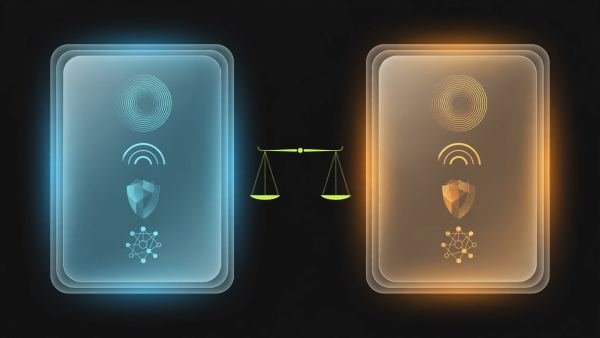
Cost of entry. GPTZero wins on accessibility: the free tier handles occasional checks without an account. Originality.ai requires payment before you scan anything meaningful. For a teacher checking their own curiosity or a student self-checking a draft, that difference decides the question before it starts.
Volume and workflow. Originality.ai wins for professional pipelines. Bulk uploads, team collaboration, detailed shareable reports, and API access are built for organizations processing content at scale. GPTZero's paid tiers add capacity, but the product's center of gravity is individual use.
Bundled plagiarism checking. Originality.ai includes plagiarism detection alongside AI detection, which matters for publishers screening submissions for both problems at once. GPTZero has added related features over time, but plagiarism checking is not its core identity.
Transparency of limitations. Both vendors, to their credit, include cautions about over-relying on scores — though those cautions tend to live in documentation rather than in the big confident percentage on the results screen. Neither tool will stop you from misusing its output. The responsibility for honest interpretation sits with the user, not the vendor.
The Accuracy Question (Asked Honestly)
So which is more accurate? Here is the honest answer: it depends on the text, and neither is accurate enough to serve as proof of anything on its own.
Independent evaluations of AI detectors consistently find meaningful error rates across all tools — false positives on human writing, false negatives on AI writing, and wide disagreement between detectors on the same passages. No detector has solved this; the underlying task (inferring authorship from statistical patterns) has fundamental limits that better engineering can shrink but not eliminate.
Anyone selling you a definitive ranking — "Tool X is 99% accurate, Tool Y is 87%" — is either citing a narrow test that does not generalize or inventing numbers. Accuracy in AI detection is not a single number. It varies by text length, genre, the AI model that (maybe) generated the text, the language of the writer, and half a dozen other factors. A detector that performs well on 1,000-word English essays may perform poorly on short technical writing or non-native English prose.
The right way to use either tool is as one input among several: the score, plus drafts and version history, plus the author's ability to discuss the work, plus a human reader's judgment. A detector score that agrees with other evidence is useful corroboration. A detector score standing alone is not evidence at all.
Which Should You Use?
Choose GPTZero if: you are an educator, student, or casual user doing occasional checks; you want to start without paying or signing up; you are checking your own writing and want a quick stylistic read.
Choose Originality.ai if: you run a publication, agency, or content operation screening submissions at volume; you need team features, bulk scanning, and shareable reports; you want plagiarism and AI detection in one workflow and have budget for it.
Choose neither as a judge if: you are deciding an academic-misconduct case, firing a freelancer, or rejecting a submission on the basis of a score alone. No detector — free or paid, GPTZero or Originality.ai — is reliable enough for that. The score starts a conversation; it does not end one.
Frequently Asked Questions
Which is better, GPTZero or Originality.ai?
Neither is objectively better — they serve different users. GPTZero is the more accessible option with a free tier aimed at educators and students checking their own work. Originality.ai is a paid product built for publishers and content teams who need bulk scanning and team workflows.
Is GPTZero free?
GPTZero offers a free tier with limited scans, which is enough for occasional checks of your own writing. Heavier use requires a paid plan. Originality.ai is primarily a paid service with credit-based pricing.
Can either detector prove AI cheating?
No. Both tools output probability estimates, not proof of authorship. Their scores are one signal among many, and both vendors' own documentation cautions against using a single score as the sole basis for an accusation.
Why do GPTZero and Originality.ai disagree on the same text?
They are different models trained on different data, measuring different signals with different weights. Disagreement between detectors is normal and expected — it is one of the strongest arguments against treating any single score as definitive.
Which should a teacher use?
If you are an educator doing occasional checks, GPTZero's free tier is the lower-friction starting point. If you are running a publication or agency screening large volumes of freelance content, Originality.ai's paid workflow features are built for that job. In both cases, treat scores as conversation starters, not verdicts.
SUGGESTED RELATED POSTS
- Related post: AI detector accuracy explained
- Related post: free vs paid AI detectors
- Related post: what AI detection scores really mean
