Paraphrased AI Text Still Gets Flagged — Here's Why
Published October 30, 2026 · 7 min read
Paraphrased AI Text Still Gets Flagged — Here's Why
Paraphrased AI text still gets flagged — and if you have ever run a ChatGPT draft through a paraphrasing tool, checked it with an AI detector, and stared at a stubborn 80%+ AI score, you are not alone. It feels like it should work: different words, different sentences, same meaning. But AI detectors are not plagiarism checkers. They are not comparing your words to a database. They are measuring statistical properties of the text itself, and surface-level rewording barely touches those properties.
This article explains what detectors actually measure, why paraphrasing leaves those signals intact, when rewording does move the needle, and what genuinely original revision looks like. No hype, no evasion tricks — just an honest explanation of how detection works.
What AI Detectors Actually Measure
To understand why paraphrased AI text still gets flagged, you need to know what a detector looks at. Modern AI detectors — whether a free AI detector tool or a commercial system — analyze text using statistical signals learned from large collections of human and AI writing. The main ones:
Perplexity: How Predictable Are Your Word Choices?
Perplexity measures how "surprised" a language model is by each word in your text. AI-generated text tends to use highly predictable words — the most likely next word, over and over. Human writing is burstier: unexpected word choices, odd phrasing, sudden shifts. When you paraphrase with a tool, the paraphraser is itself an AI model choosing likely words. You have replaced one set of predictable choices with another set of predictable choices. Perplexity barely moves.
Burstiness: How Varied Is Your Sentence Rhythm?
Human writers mix short punchy sentences with long winding ones, fragments, asides. AI models default to a steady rhythm — medium-length sentences, one after another. Most paraphrasing tools preserve or even smooth out the sentence structure they are given. The rhythm stays machine-regular, and detectors notice.
Structural Fingerprints
Beyond word choice, detectors pick up on deeper patterns: how arguments are organized (AI loves the "three reasons" structure), transition habits ("Furthermore," "In conclusion," "It's important to note"), hedging patterns, and the generic specificity of examples. A paraphraser that swaps "utilize" for "use" does not touch any of this.
Why Synonym-Swapping Fails: A Concrete Example
Consider this AI-generated sentence:
"Furthermore, it is important to note that effective communication plays a crucial role in successful team collaboration."
A paraphraser might produce:
"Moreover, one should acknowledge that efficient communication is vital for productive teamwork."
Different words — same statistical soul. The sentence still opens with a transition crutch, still hedges ("one should acknowledge"), still uses the abstract-noun-heavy phrasing AI models default to. A detector sees through the synonym swap instantly because it was never reading the synonyms. It was reading the pattern.
Now compare a genuine human rewrite:
"Teams that actually talk to each other get more done. Sounds obvious. Most teams don't."
Short. Varied. A fragment. An opinion stated flatly. This is what low-perplexity, high-burstiness writing looks like — and no paraphrasing tool produces it, because paraphrasers are designed to preserve meaning and structure, which is precisely what gives AI text away.
When Paraphrasing Does Lower the Score (a Little)
It is not true that paraphrasing never works. Aggressive rewording can modestly reduce AI scores when it:
- Restructures sentences, not just swaps words — splitting, merging, reordering clauses.
- Breaks the rhythm — introducing fragments, questions, and varied lengths.
- Removes AI filler — cutting "furthermore," "delve," "in today's fast-paced world," and the other tells.
- Adds specificity — concrete numbers, names, and examples, which are inherently less predictable.
But note what is happening in each case: the text is being genuinely revised, not just reworded. The paraphraser is a starting point; the human editor does the real work. And even then, results vary — one detector's score may drop while another's holds steady, because each tool weights signals differently.
The Detector Disagreement Problem
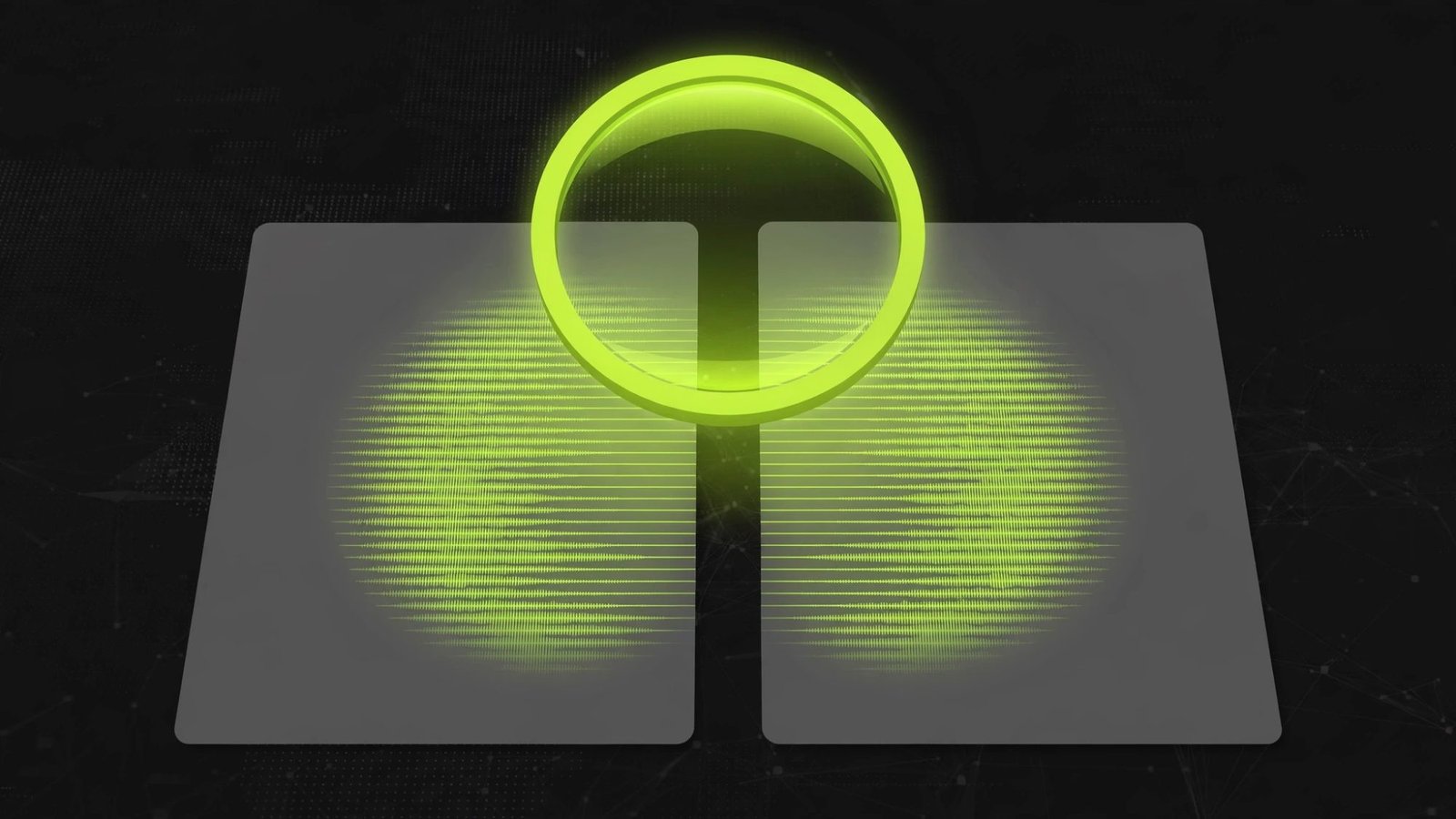
Here is something the detection industry rarely advertises: five detectors can give five different scores for the same paraphrased paragraph. One says 92% AI, another says 34%, a third says "uncertain." This is not a bug — it is the nature of statistical classification. Each detector trains on different data, uses different model architectures, and sets different thresholds.
This matters for two reasons. First, "passing" one detector proves nothing about the others. Second, and more importantly, it reveals what AI scores are: likelihood estimates, not verdicts. A score of 87% AI does not mean 87% of the text was written by AI. It means the text's statistical patterns look more like the detector's AI training samples than its human ones. Treat every score as one noisy signal, not a judgment.
What This Means for Students and Writers
If you are a student: understand that paraphrasing AI output and submitting it as your own work is still academic misconduct at most institutions — and detectors are only one way instructors catch it. Stylistic inconsistency (your discussion posts sound nothing like your essay) is often more revealing than any score. If your course allows AI assistance, disclose it and use AI as a drafting aid, not a ghostwriter.
If you are a writer or marketer: stop optimizing for detector scores and start optimizing for readers. The irony is that genuinely good writing — specific, rhythmic, opinionated — naturally scores lower on detectors, because detectors are measuring the absence of exactly those human qualities. Write well and the scores take care of themselves.
How to Genuinely Revise AI-Assisted Text
If you use AI in your writing process and want the final product to be truly yours, do this:
- Restructure, don't reword. Change the order of ideas. Merge sections. Cut the AI's outline and impose your own.
- Add what only you know. Personal anecdotes, specific data from your work, opinions you actually hold. AI cannot fake your experience — and this is the single biggest differentiator.
- Break the rhythm deliberately. Short sentences. Fragments. A question to the reader. Read it aloud and fix every place it sounds like a press release.
- Kill the tells. Search for "furthermore," "moreover," "in conclusion," "delve," "tapestry," "landscape" (as metaphor), "it's important to note." Delete or rewrite every one.
- Have a human read it. A second pair of eyes catches robotic phrasing you have gone blind to. This is what editors are for.
None of this is a trick to "beat" detectors. It is just writing — the human kind, with judgment and experience in it. That is also why it works: detectors measure the statistical traces of machine generation, and genuine human revision removes them by replacing them with something real.
Frequently Asked Questions
Why does paraphrased AI text still get flagged?
Because paraphrasing changes surface words but preserves the underlying statistical patterns detectors measure — predictable word choices, uniform sentence rhythm, and AI-typical phrasing structures. Detectors analyze these deeper patterns, not just vocabulary.
Can paraphrasing ever lower an AI score?
Sometimes, modestly. Aggressive rewording that genuinely restructures sentences can reduce AI-like signals. But light synonym-swapping rarely moves the score much, and results vary widely across different detectors.
What does an AI detection score actually mean?
It is a likelihood estimate, not a verdict. A score of 87% AI means the text's statistical patterns resemble AI-generated training data more than human writing samples — it does not prove who wrote it or how.
Do different detectors agree on paraphrased text?
Often not. Five detectors can give five different scores for the same paraphrased paragraph, because each uses different models, thresholds, and training data. Disagreement is normal, not a sign one tool is broken.
How can I make AI-assisted writing genuinely original?
Do substantial human editing: restructure arguments, add original examples and personal experience, vary your rhythm deliberately, and cut AI filler phrases. Surface rewording is not enough — real revision changes the text's statistical fingerprint.
