Translate Scanned PDF to English: The Free OCR Method (2026)
Published October 26, 2026 · 9 min read
Translate Scanned PDF to English: The Free OCR Method (2026)
Translate scanned PDF to English is a task that fails the moment most people try it — and the reason is simple. A scanned PDF is not a document full of text. It is a stack of photographs of text. Translation tools work on characters, and a photograph has none. Until something converts those pictures into real, selectable text, there is nothing to translate.

That conversion step is called OCR — optical character recognition — and it turns a two-step problem into a solvable workflow: OCR the scan first, then translate the extracted text. This guide walks through the free method that works, the free tools for each step, where accuracy breaks down, and the limits you need to respect.
Step 1: Understand What You Are Working With
Before anything else, check what kind of PDF you actually have. Open it and try to select a sentence with your cursor. If you can highlight the text, it is a text-based PDF and you can translate it directly — no OCR needed. If the whole page highlights as one block, or nothing selects at all, it is a scanned (image-based) PDF and OCR is required.
Scans come in different qualities, and quality decides everything about how well this works:
- Clean scans (300 DPI or higher, straight pages, printed text): OCR handles these well.
- Phone photos of pages: workable if the photo is sharp, well-lit, and taken straight-on; skewed or shadowed photos degrade accuracy fast.
- Old or degraded documents (faded print, stains, unusual typefaces): expect errors and plan to proofread carefully.
- Handwriting: most free OCR tools struggle with handwriting. Printed text is the realistic use case.
If your scan is poor quality, the single highest-leverage improvement is re-scanning or re-photographing the pages properly before you start. Ten minutes of better input saves an hour of fixing OCR errors later.
Step 2: Run OCR to Extract the Text
OCR converts the page images into selectable, editable text. Several free options handle this:
Google Drive (easiest, free). Upload the scanned PDF to Google Drive, right-click it, and open with Google Docs. Drive runs OCR automatically and produces an editable document with the images at the top and extracted text below. It handles clean scans of common languages well and costs nothing. Limitations: it can mangle complex layouts, and very large files may take a while.
Dedicated free OCR tools. Desktop and web-based OCR applications exist specifically for this job and often handle batch processing, multi-page documents, and trickier layouts better than Drive. Look for tools that let you review and correct uncertain characters — the "suspicious character" highlighting in dedicated OCR software saves real proofreading time.
Mobile scanning apps. If your source is paper rather than a PDF, phone scanning apps capture pages, straighten and clean them up, run OCR, and export searchable PDFs or text. For a few pages this is the fastest path from paper to translated text.
Whichever tool you use, the output needs proofreading before translation. OCR errors are not random noise — they are plausible-looking wrong characters (rn for m, 1 for l, 0 for O) that survive spellcheck and then get translated confidently into wrong English. Read through the extracted text once, especially names, numbers, dates, and technical terms. For a long document, at minimum spot-check every page.
Step 3: Translate the Extracted Text
Once you have clean text, translation is the easy part. Paste it into a free AI translator in chunks — long documents translate more reliably in sections than in one giant paste, and section-by-section work lets you catch problems early.
A few practices that improve translation quality:
- Translate in the document's original structure. Keep headings, paragraphs, and lists intact so the translated version maps back to the original page by page.
- Watch for OCR artifacts that survived proofreading. If a translated sentence makes no sense, check the source text — the problem is usually an OCR error upstream, not a translation failure.
- Handle tables manually. OCR mangles tables more than any other element. Rebuild important tables in a spreadsheet before translating, or translate the table contents cell by cell.
- Keep names and proper nouns consistent. Machine translators sometimes transliterate names differently across sections. Pick one rendering and standardize it.
For documents with mixed content — say, a report with charts and captions — translate the body text first, then handle captions, footnotes, and figure labels as a second pass so nothing gets lost.
Where Accuracy Breaks Down
The honest limits of this workflow, so you can plan around them:
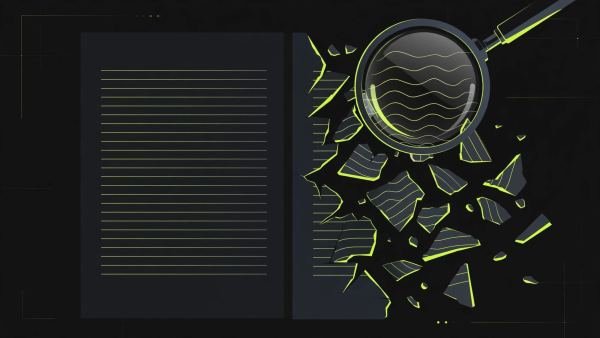
OCR is the weak link, not translation. Modern machine translation between major languages is good. Most of the errors in a scan-to-English pipeline originate in the OCR step — misread characters, lost formatting, dropped diacritics. Investment in scan quality and proofreading pays off more than switching translation tools.
Layout rarely survives. Multi-column layouts, sidebars, pull quotes, and complex tables almost never come through OCR cleanly. Expect to reconstruct the document's structure by hand. For documents where layout matters (forms, certificates, official records), plan significant manual work.
Low-resource languages are harder. OCR and translation quality both depend on how much training data exists for a language pair. Common European and Asian languages work well; less common languages produce rougher results and need more human review.
Handwriting is mostly out of scope. If your scanned PDF is handwritten, free OCR will disappoint you. Transcribe it by hand, then translate the transcription.
What This Workflow Cannot Do: Official and Legal Documents
This matters enough to state plainly: a machine translation produced by this workflow is not a certified translation. It is not accepted for immigration filings, court proceedings, academic credential evaluations, visa applications, or any other official purpose. Those contexts require a certified human translation — a complete, accurate rendering with a signed statement of accuracy from the translator or agency, and sometimes notarization.
Use the OCR-plus-translation workflow for what it is good at: understanding a document's contents, triaging which pages matter, preparing a draft to hand to a professional translator, or working with personal and informal material. When the stakes are official, hire a certified translator and budget for it. The free workflow tells you what the document says; it does not produce a document anyone official will accept.
For immigration paperwork specifically, the requirements are strict and the consequences of getting them wrong are severe — which is covered in detail in the immigration documents guide linked below.
A Practical Checklist
For a typical scanned PDF you want to read in English:
- Test whether the PDF has selectable text — if yes, skip OCR entirely.
- If scanned, assess quality; re-scan poor pages at 300+ DPI if you can.
- Run OCR (Google Drive for simple jobs, dedicated software for complex ones).
- Proofread the extracted text — focus on names, numbers, dates, technical terms.
- Translate in sections through a free translator, keeping the structure intact.
- Rebuild tables and fix layout by hand.
- Standardize names and terminology across the whole document.
- Do a final read of the English version against the original for anything that looks off.
The whole process for a ten-page clean scan typically takes under an hour, most of it proofreading. That is the real cost of the method — not money, but the careful review pass that separates a usable translation from a misleading one.
Frequently Asked Questions
Why can't I translate a scanned PDF directly?
A scanned PDF contains images of pages, not selectable text. Translation tools work on text characters, so there is nothing for them to read until optical character recognition (OCR) converts the image into actual text. Run OCR first, then translate the extracted text.
What is the best free OCR tool for scanned PDFs?
For occasional use, Google Drive's built-in OCR (upload the PDF, open with Google Docs) handles clean scans well and costs nothing. Dedicated free OCR tools and desktop apps handle batch files and trickier scans better. Accuracy depends mostly on scan quality, not on which free tool you pick.
How accurate is OCR on scanned documents?
On clean, high-resolution scans of printed text, modern OCR is very accurate — typically close to the original. Accuracy drops with low-resolution scans, handwriting, unusual fonts, skewed pages, tables, and multi-column layouts. Always proofread the OCR output before translating, because translation amplifies OCR errors.
Can I translate a scanned PDF on my phone?
Yes. Mobile scanning apps can photograph pages, run OCR, and translate the result, and some translate directly from the camera. Phone workflows are convenient for a few pages but tedious for long documents — use a desktop for anything over a handful of pages.
Is a machine translation of a scanned document legally valid?
No. Machine translation is not a certified translation and is not accepted for official purposes like immigration filings, court documents, or academic credential evaluation. Those require a certified human translation with a signed statement of accuracy. Use the OCR-plus-translation workflow for understanding a document, not for submitting it officially.
How do I handle a scanned PDF with tables and images?
Tables are the weak point of OCR — cell boundaries and merged cells often come out scrambled. Extract the text, then manually reconstruct tables in a spreadsheet or document before translating. For images inside the PDF, translate any captions separately and note where the image sits in the flow of the document.
SUGGESTED RELATED POSTS
- How to Translate Immigration Documents: Certified vs Machine Translation
- DeepL vs Google Translate: Which Is More Accurate for Documents?
- Best Free AI Translator for Long Documents (2026)
